


1. Nylon filament
Performance:
Polyamide fiber strength is high, is the best of all textile fibers in the abrasion resistance of the fiber, its abrasion resistance of cotton 10 times, 20 times the wool, viscose fiber 50 times. The moisture absorption of polyamide fiber is higher. Polyamide fiber is easier to dye, generally available acid dyes, disperse dyes and other dyes.
Uses:
Polyamide fibers can be used to make socks, underwear, shirts, sweatshirts, etc. They can also be made into carpets, bedding and outdoor trimmings, and fabrics for furniture.
In industrial use, polyamide fiber is mainly used to make tire cord, drive belt, transport belt, fishing nets, cables, tarpaulin base cloth, sewing thread, filter cloth, non-woven fabrics and so on.
2. Polypropylene filament
Performance:
The initial modulus of polypropylene fiber filament is 35.3~105.8cN/dtex, which is better than polyamide fiber and inferior to polyester fiber. The instantaneous resilience of polypropylene fibers is between polyamide fibers and polyester fibers, and when the elongation is 5%, its resilience is 88% to 98%. Polypropylene fibers are generally colored by pre-spinning coloring method to produce colored fibers. Polypropylene fibers have a wide range of uses in the industrial and decorative fields because of their high strength, high tenacity, good chemical resistance, and low price.
Uses:
Polypropylene fibers are used to make underwear, ski shirts, socks and children's clothing, as well as cold-resistant outdoor clothing, motorcycle sportswear, mountaineering clothing, marine clothing and flight suits.
Fine line density polypropylene fiber has excellent core absorption effect, breathable, moisture conductive performance is very good, close to the skin when wearing can keep the skin dry, no stuffy feeling. Carpets are an important application area for polypropylene fibers today. In various nonwovens, spunbond method is the fastest growing, and most of the spunbond nonwovens are polypropylene.
Polypropylene woven geotextile, built on soft ground on the civil engineering (such as dams, reservoirs, highways, railroads, etc.) to play a reinforcing role, and so that the bearing load is evenly distributed, so that the settlement of the roadbed is uniform, to reduce ground cracking.
Polypropylene fiber can also be used for decorative fabrics, felt, canvas, bags, cigarette filters, artificial turf and medical and health supplies.
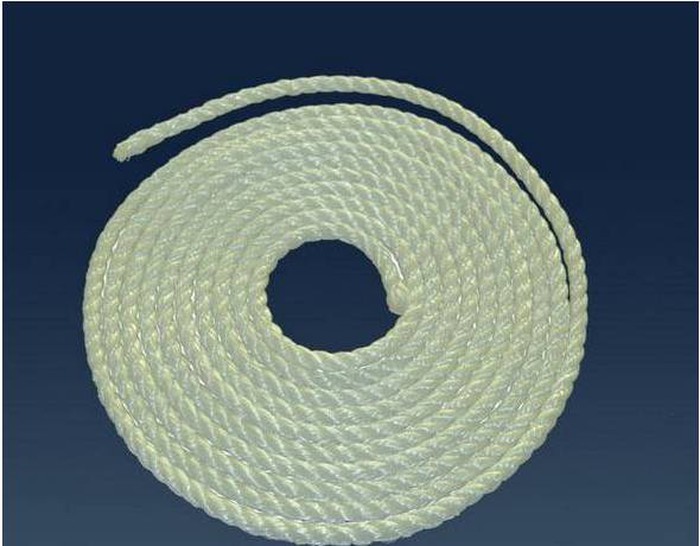
3.Acrylic Filament
Performance:
Acrylic is very much like wool, so it is known as "artificial wool", its main features are light and warm, brightly dyed and firm, moth-proof, mildew-proof and sunlight-resistant. Polyacrylonitrile has high thermal stability, the color of its fiber should not change when heated to 170-180℃. Polyacrylonitrile fiber can be made into carbon fiber by heat treatment at high temperature, acrylic fiber is an important carbon fiber raw silk.
Uses:
Acrylic blended or pure spinning can be made into beige, wadding, coat tweed, sweatshirts, knitwear, blankets, shaggy fabrics and shrinkage brushed fabrics. Acrylic as carbon fiber raw silk, after pre-oxidation, carbonization and graphitization process made of carbon fiber, can be used in military, aerospace and other high-tech.
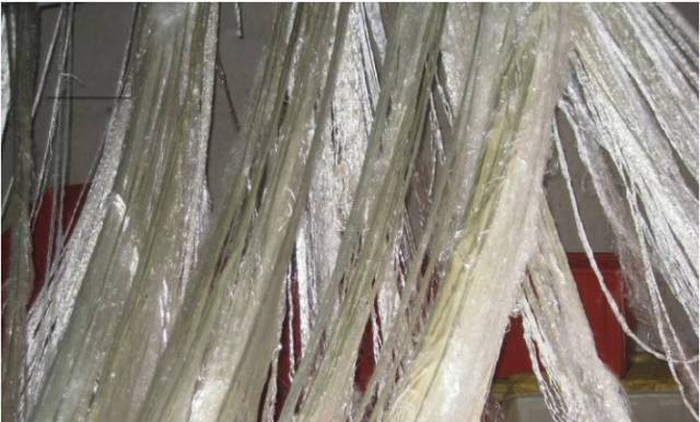
4.Spandex Filament
Performance:
Spandex fiber has great elasticity, its elongation can be greater than 400%, even as high as 800%, the elongation of 500% when its rebound rate of 95% to 99%. In general, the molecular structure of spandex fiber, the greater the relative molecular mass of the soft chain segment part, the higher the elasticity and resilience of the fiber. The modulus of elasticity of spandex is small, the softness of the filament is good, the durability of spandex is strong, the fatigue resistance is good, and spandex is resistant to most acids, alkalis and chemical solvents.

Uses:
Provided to textile mills to weave elastic fabrics spandex yarn (yarn) are bare silk, coated yarn, core blended yarn and co-twisted yarn.
1,Spandex bare silk
That is, spandex raw silk, can be manufactured in a wide range of elongation range of knitted fabrics, such as elastic net for clothing, clothing and swimwear with elastic cylinder knitted fabrics, women's socks (long), short stocking mouth part, knitting tape and tape.
2,Covering yarn
It refers to spandex yarn with other kinds of filaments covered on the outer layer. Covering yarn has a single layer of covering yarn and double-layer covering yarn. Mainly used for clothing backing, such as belts, bras, surgical knitwear, the upper part of the socks, banded fabrics and shoelaces.
3,Core blended yarn
Also called core-spun yarn, wrapped by spandex by other varieties of staple fiber yarn. Core spun yarn can be made with a wide range of uses, excellent performance, beautiful style of knitted fabrics and textiles.
Translated with www.DeepL.com/Translator (free version)
4,Combined twisted yarn
Also known as twisted yarn, from 1 to 2 ordinary cotton yarn, wool yarn or nylon and spandex merger twisted into, often used to weave elastic labor cloth. Can be made into woven fabrics, knitted fabrics (warp knitting and weft knitting), narrow fabrics (i.e., band fabrics) and other varieties.
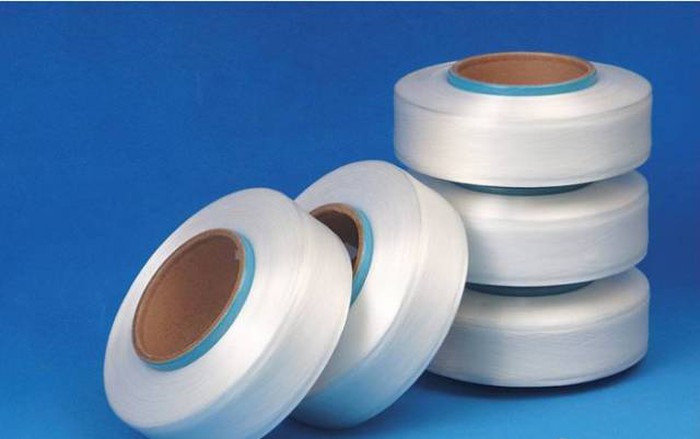
5. Vinylon filament
Performance:
Vinylon's main advantage is good moisture absorption, the standard state (20 ℃, RH 65%) of the moisture regain rate of 2.5% to 4.5%, is the best of the conventional synthetic fiber varieties. Vinylon has good corrosion resistance and sunlight resistance, long time placed in seawater or buried in the ground, there is no significant decline in strength.
Uses:
The properties and appearance of Vinylon filament are very similar to those of natural silk, and can be woven into satin garments. One important use is for Vinylon reinforcing materials, which are used in two main ways, firstly for reinforcing plastics and secondly for reinforcing cement, asbestos sheets and ceramics. Vinylon fiber can also be used in fishing nets, cables, canvas, cord and packaging materials.
6.Viscose Fiber
Performance:
Viscose fiber in the raw material is wood pulp meal, cotton short staple and other natural resources, it has biodegradability, no accumulation in the environment, no toxic gas occurs after combustion, it is extremely beneficial to the resource environment fiber materials.
Viscose fiber has many excellent properties, its outstanding advantages are: excellent moisture absorption, excellent dyeing can be dyed with direct dyes, sulfur dyes, reactive dyes and a variety of other dyes; complete chromatography, color and luster firm, bright colors; with high heat resistance.
Uses:
1,Civil use
Viscose fiber can be pure spinning can also be blended or interwoven, the fabric texture is fine and soft, smooth feel, breathable, comfortable to wear, dyed bright colors, suitable for underwear, outerwear and a variety of decorative materials. In addition, it is also widely used in non-woven fabrics.
2,Industry and other applications
Viscose fibers are widely used in tires, pressure hoses, conveyor belts, canvas, coated fabrics and so on. Viscose fiber carbonization at 3000 ℃ can be made of high-strength, high-modulus carbon fiber, is the aerospace, military and many high-tech areas of important reinforcing materials. Viscose fiber made of hemostatic fibers, gauze, bandages and medical sheets, clothing, etc., in the medical and health sector has a wide range of uses.
7.PBT fiber
Performance:
PBT macromolecular chain with ester group and benzene ring structure, which is to make it have excellent elastic recovery and strength, as well as similar to polyester dyeing fastness, light resistance, heat resistance, chemical resistance and dimensional stability.
PBT deformed silk and its fabrics excellent compression elasticity and tensile elasticity.PBT fibers are easy to dye, when using disperse dyes, color absorption detailed rate of about 75%.
Uses:
PBT fiber has good elasticity and dispersive dyes normal pressure boiling dyeing, while maintaining the polyester has the wash wearable, stiffness and dimensional stability, mainly can be used for processing silk-type fabrics, color woven fabrics, warp knitting fabrics and decorative fabrics; high elasticity filament is used in the production of sportswear, elastic bandage, hosiery and elastic labor cloth.
8.Cationic dyes dyeable polyester filaments
Performance:
Due to the high crystallinity of polyester, compact structure, dye molecules are not easy to enter the fiber inside, making dyeing difficult, monotonous color. For this reason, compounds with strong acidic sulfonic acid groups or less acidic phosphoric acid groups can be colored and copolymerized with PET to obtain a good cationic dye dyeable copolyester (CDP). Polyester dyed with cationic dyes under normal or pressurized conditions by chemical modification is called cationic dyeable polyester.
Uses:
The cationic dyeable polyester filament and acrylic, tricot polyester, wool, viscose blended interweaving one-bath dyeing (same-bath dyeing), can be achieved to leave white, shades of different colors and other special effects. The products are unique in style and variety, and are suitable for wool spinning, color weaving, knitting, silk and other industries.
9.Shaped filament
Performance:
Shaped filament is spun with a non-round cross-section of the filament with shaped spinneret holes, in the fiber cross-sectional area is equal, shaped filament than round filament has greater bending stiffness, so the fiber's excellent resistance to pilling, good elasticity; and the surface of the longitudinal concave-convex, weaving, fiber holding force increases, and has a special luster.
Usage:
According to the different varieties and cross-sectional shapes, it is mainly used for satin-type fabrics and crepe-type fabrics, making high-grade women's clothing. Silk-type fabrics, such as georgette yarn xianneng wrinkle, paillettes, poplin, etc.. Wool type fabrics. Hemp-type fabrics. Similar to antelope wool, rabbit hair, mohair and other special animal fiber products.