


Badminton first appeared as a demonstration sport at the 1972 Munich Olympics; in 1988, it re-emerged as a demonstration sport at the Seoul Olympics; by the 1992 Barcelona Olympics, badminton officially became an Olympic event, with the first men's and women's singles and doubles competitions held. The mixed doubles were added at the 1996 Atlanta Olympics. Wheelchair badminton made its debut at the 2021 Tokyo Olympics.
The Development History of Carbon Fiber Composite Materials in Badminton
The earliest badminton rackets were made of solid wood, and following the technological developments of tennis rackets, they transitioned to laminated wood materials. Starting from the 1960s, badminton rackets began to incorporate aluminum or steel, with aluminum primarily used for the racket head and steel for the shaft.
Due to the high stress experienced at the joint between the head and the shaft during play, this area was prone to breaking. In 1968, Yonex introduced the T-joint concept, connecting the head to the shaft by inserting a third element shaped like a T, made of high-strength steel. In 1978, Yonex produced the first carbon fiber composite badminton rackets in Japan: the Carbonex 8 B-8500B1, weighing less than 100 grams (Figure 1). Since then, most competitive badminton rackets have used carbon fiber composite materials, while cheaper recreational rackets still use aluminum and steel.

Figure 1: The first carbon fiber badminton racket was born in 1978
The manufacturing method of carbon fiber composite (CFRP) badminton rackets is similar to that of tennis rackets but also has significant differences. The shaft is hollow, made in a similar way to the framework of a tennis racket, but it is straight with a much smaller cross-section (circular); the head is not hollow but solid, as it is made from folded and compressed carbon fiber pre-preg, which is then covered in a mold; subsequently, the head and the (pre-cured) shaft are connected by a CFRP T-joint, sliding the two horizontal tips into the ends of the folded pre-preg and the vertical tip into the hollow shaft, which is then cured in the mold.
The Latest Developments in Badminton Rackets Using Carbon Fiber Composite Materials
Badminton rackets are differentiated by various characteristics: flexibility, weight, and balance point, ranging from head-heavy to head-light. Carbon fiber composite materials can optimize these features by changing the type of fibers used (from high-strength to ultra-high modulus carbon fiber), fiber orientation, and layering. Modifying the mold can also optimize the head's cross-section to enhance resistance to high tension and reduce aerodynamic drag. The most famous manufacturers are Yonex, Victor, Carlton, FZ Forza, Dunlop, Li Ning.
The performance of badminton rackets can be further optimized by mixing various types of fiber materials (Figure 2), such as Yonex's "Nanoflare 800 Pro," which contains high-stiffness Toray M40X carbon fiber and ultra-high molecular weight polyethylene fibers (to improve shock absorption). Yonex Carbonex8000 heads use a mix of carbon fiber composite materials with titanium mesh or carbon nanotubes to achieve a more stable hit.

Figure 2: Enhancing racket performance by mixing CFRP with other materials
Additionally, CFRP is used in badminton beyond the racket, such as in the Victor company's CarbonSonic shuttlecock, which uses foam feathers reinforced with CFRP (Figure 3) to reduce weight and improve durability.
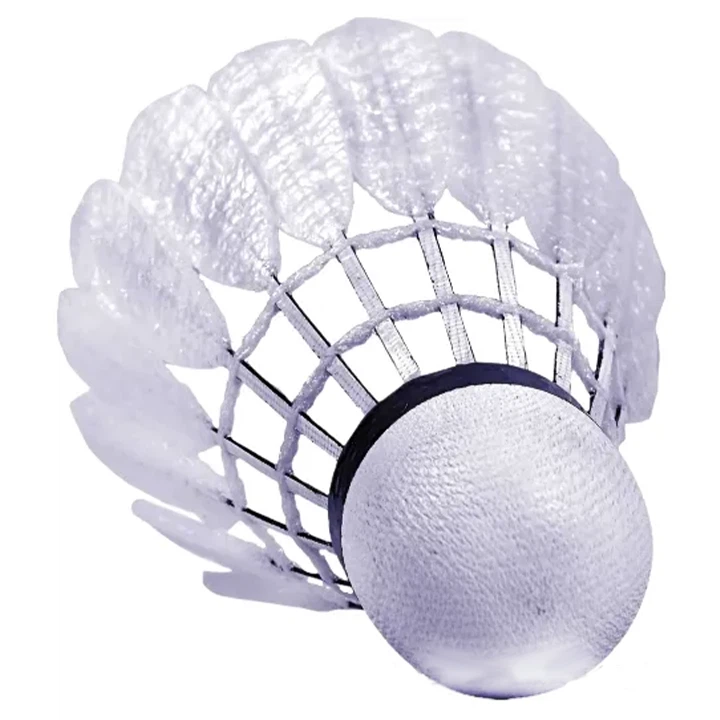
Figure 3: Shuttlecock feathers reinforced with CFRP
Since the appearance of badminton at the 2021 Tokyo Paralympics, both wheelchair (Figure 4) and standing athletes (Figure 5) have used carbon fiber rackets in the competition. Particularly for wheelchair athletes, the wheelchair structure is complex, with welded aluminum or magnesium tubes used for the basic structure of the wheels, but the wheels and seat sometimes use carbon fiber composite materials to reduce weight and thus improve mobility.
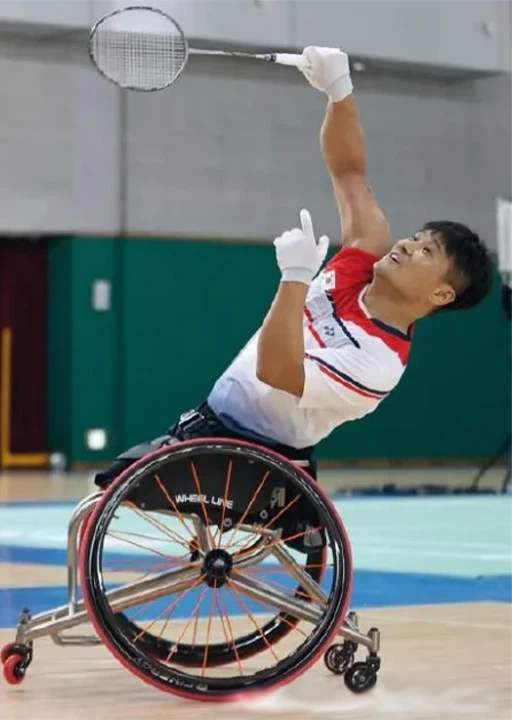
Figure 4: Badminton rackets and wheelchairs used in Paralympic badminton sport that incorporate CFRP

Figure 5: Standing athletes participating in badminton at the Paralympics